
As EV batteries become larger and commercial vehicles require faster turnaround times, traditional 60kW, 120kW, or even 240kW DC chargers may no longer be sufficient for every application.
This is why 480kW+ EV chargers are becoming increasingly important for Europe's next-generation charging infrastructure.
1. EV Batteries Are Getting Larger
One of the biggest reasons Europe needs higher-power chargers is the increasing battery capacity of electric vehicles.
Modern electric cars can have battery packs exceeding 80–100 kWh, while electric trucks and buses can require several hundred kWh.
For example, charging a 100 kWh battery at:
120kW: approximately 50 minutes from 20% to 80%
240kW: approximately 25 minutes
480kW: approximately 12–13 minutes
Actual charging time depends on the vehicle's maximum charging power, battery temperature, state of charge, and charging curve.
The key point is simple:
Higher charger power can significantly reduce charging time when the vehicle is capable of accepting it.
2. Faster Charging Is Critical for Highway Mobility
European highways connect major cities, logistics hubs, ports, and industrial centers across national borders.
For long-distance EV travel, charging time directly affects the overall journey.
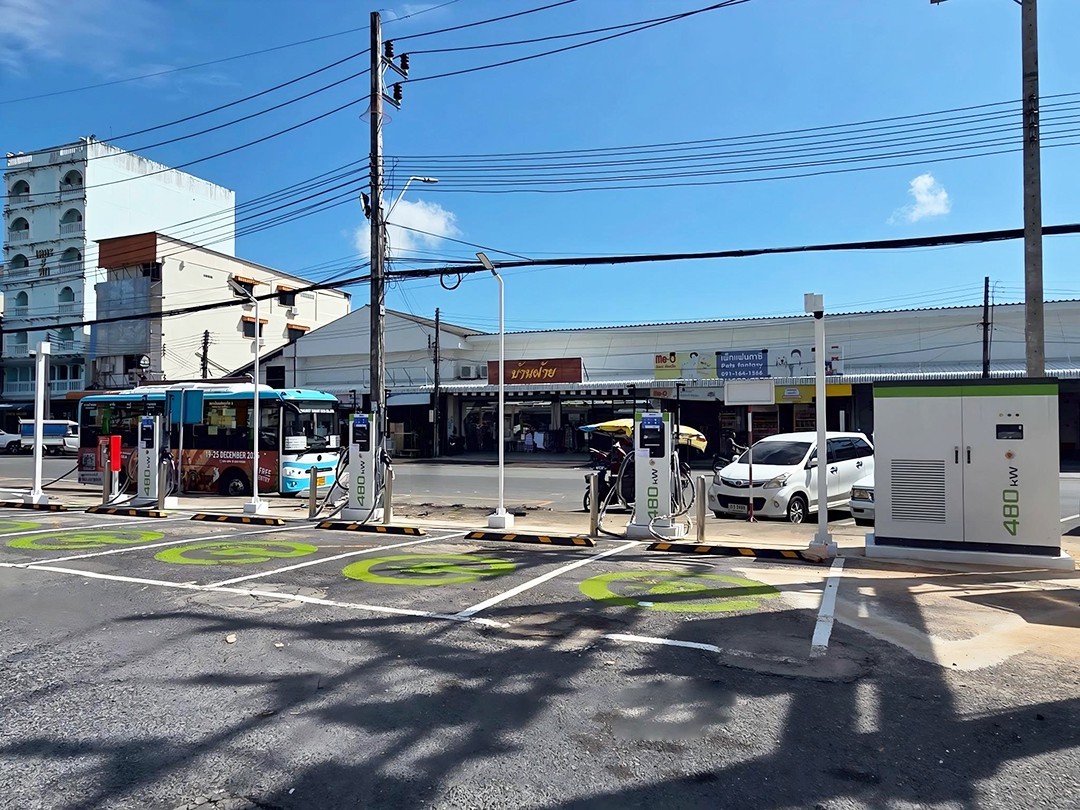
A conventional charging station may require vehicles to stay connected for 30–60 minutes or longer.
A high-power 480kW+ charger can potentially reduce charging stops and increase station throughput.
This is particularly valuable for:
Highway charging hubs
Long-distance passenger EVs
Electric trucks
Electric buses
Logistics fleets
Taxi and ride-hailing fleets
For commercial operators, every minute saved at a charging station can translate into higher vehicle utilization.
3. Electric Trucks Need Much More Charging Power
The transition to electric mobility isn't limited to passenger cars.
Europe is also accelerating the electrification of heavy-duty transportation.
Electric trucks have much larger batteries than passenger vehicles. A long-haul truck may require several hundred kWh of energy during a single operating cycle.
A 120kW charger that works well for passenger cars may not be practical for a heavy-duty fleet.
This creates demand for:
480kW → 600kW → 1MW+ charging infrastructure
High-power charging allows trucks to recharge during scheduled breaks instead of spending extended periods at charging stations.
This is one of the key reasons why Europe is moving toward Megawatt Charging System (MCS) technology.
4. Higher Power Means Higher Charging Station Throughput
Charging station operators are not only concerned about charging speed. They also need to maximize the number of vehicles that can be served.
Consider a busy highway charging hub with limited land and grid capacity.
Instead of installing a large number of lower-power chargers, operators can deploy fewer high-power chargers and intelligently distribute available power between vehicles.
For example:
480kW charger
→ 480kW available power
→ Dynamic power allocation
→ Multiple charging points
→ Intelligent load management
→ Higher utilization
This approach can help operators make better use of expensive grid connections and charging-site infrastructure.
5. Europe's Grid Infrastructure Creates Another Challenge
There is, however, a major challenge.
A 480kW+ charging station requires substantial electrical capacity.
If dozens of high-power chargers operate simultaneously, the site's peak electricity demand can become extremely high.
For many locations, simply installing a larger grid connection is not the most economical solution.
This is where Energy Storage Systems (ESS) and intelligent energy management become increasingly important.
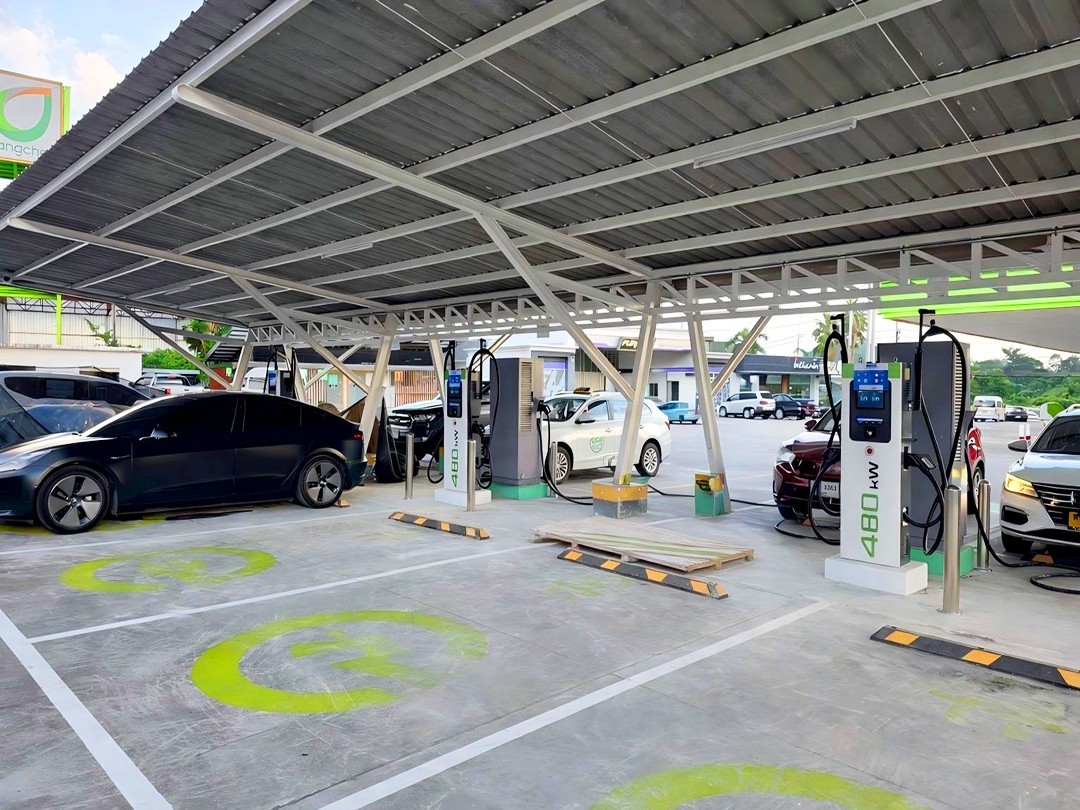
A charging site can combine:
Grid + PV + ESS + DC Fast Chargers
The ESS can store electricity when demand or electricity prices are lower and provide additional power during charging peaks.
This can help reduce:
Grid peak demand
Transformer capacity requirements
Demand charges
Pressure on local distribution networks
6. 480kW+ Chargers Are About More Than Speed
High-power charging should not be viewed simply as a race for higher kW.
The real objective is to build more efficient, scalable, and intelligent charging infrastructure.
A next-generation charging system should combine:
High Power
480kW+ DC charging for vehicles capable of accepting high charging power.
Dynamic Power Allocation
Available power can be intelligently distributed between multiple vehicles according to charging demand.
Energy Storage
ESS can supplement the grid during charging peaks.
Solar Integration
PV generation can provide renewable energy directly to the charging ecosystem.
Smart Energy Management
Energy management systems can optimize charging based on grid capacity, electricity prices, renewable generation, and vehicle demand.
Future Compatibility
Support for technologies such as OCPP 2.0.1, ISO 15118, Plug & Charge and MCS can help charging infrastructure remain adaptable as EV technology evolves.
7. 480kW+ Is a Bridge Toward Megawatt Charging
480kW is not necessarily the final destination.
The charging requirements of heavy-duty vehicles are pushing the industry toward Megawatt Charging Systems (MCS).
MCS is designed to provide charging power at the megawatt level, potentially reaching around 1MW or more for suitable applications.
The development path is increasingly clear:
120kW → 240kW → 480kW → 600kW → 1MW+
For charging infrastructure developers, investing in high-power systems today can therefore be part of a broader strategy for future megawatt charging.
8. Where Will 480kW+ Chargers Be Most Valuable?
Not every charging site needs 480kW.
The strongest business cases are likely to come from locations with high vehicle utilization and strong demand for rapid charging.
9. What Should Charging Operators Look For?
When investing in 480kW+ infrastructure, maximum power should not be the only consideration.
Operators should evaluate:
Power scalability
Can the system support future expansion from 480kW toward 600kW or 1MW+?
Dynamic power distribution
Can power be intelligently allocated between multiple charging vehicles?
Grid compatibility
Can the system operate efficiently under limited grid capacity?
ESS integration
Can battery storage be integrated to reduce peak grid demand?
Reliability
Can the charger maintain stable operation under continuous high-power charging?
European standards
Does the system support relevant European charging standards, communication protocols, and payment requirements?
Total Cost of Ownership
The best charger is not necessarily the one with the highest output. It is the system that provides the best combination of power, utilization, reliability, energy efficiency, scalability, and ROI.
10. The Future of European EV Charging
Europe's EV charging infrastructure is moving from simply adding more charging points toward building higher-performance charging ecosystems.
The next generation of charging stations will increasingly combine:
480kW+ DC Charging
+ Dynamic Power Allocation
+ ESS
+ Solar PV
+ Smart Energy Management
+ OCPP 2.0.1
+ ISO 15118 / Plug & Charge
+ MCS
This integrated approach can help charging operators handle growing EV demand while making better use of limited grid capacity.
Conclusion
Europe needs more 480kW+ EV chargers because the EV market is changing.
Larger batteries, higher EV adoption, electric trucks, long-distance transportation, fleet electrification, and growing charging demand are all increasing the need for faster and more powerful charging infrastructure.
But the future isn't simply about installing chargers with bigger power ratings.
The real opportunity is to build intelligent, scalable charging systems that combine high-power DC charging with energy storage, renewable energy, and smart energy management.
For Europe, 480kW+ charging can be an important step toward a faster, more efficient, and future-ready EV charging network-and a bridge toward the megawatt charging era.
Related Posts
- ISO 15118 and OCPP for V2G: How EVs, Chargers and Charging Networks Communicate
- 8,833 Battery Electric Vehicles Registered in Malaysia in August 2026
- Why 1.2MW Charging Requires Smart Energy Management
- What Is the Megawatt Charging System (MCS) and How Does It Work?
- Teison Is Heading to IAA TRANSPORTATION 2026!