
According to the U.S. "Wall Street Journal" website on July 22, China's thirst for oil has driven global demand for decades. Today, a Chinese government action to reduce its dependence on oil is approaching a milestone, and China's oil consumption is expected to peak by 2027 and then begin to decline.
The report said that the Chinese government has long been worried that the United States and its allies may curb China's economic development by controlling overseas oil supplies to China. Therefore, China has invested heavily in strengthening domestic oil production and rapidly building a world-leading electric vehicle industry to get rid of its dependence on imported oil.
Across China, fuel-powered models in taxis are being replaced by locally designed and produced electric models. Last year, nearly half of the passenger cars sold in China were pure electric vehicles or plug-in hybrid vehicles.
According to the report, from 2018 to 2024, China's domestic oil production increased by 13% to about 4.3 million barrels per day. China's crude oil imports fell by about 2% last year, but have rebounded slightly this year as some Chinese companies have increased their inventories.
The International Energy Agency predicts that China's oil demand may peak within two years.
In 2013, when China surpassed the United States to become the world's largest net oil importer, its reliance on overseas crude oil seemed set to continue to grow, the report said. This made China realize that an energy revolution was needed to safeguard national security.
The report pointed out that the Chinese government has taken a series of actions to promote the development of China's emerging electric vehicle industry. The development of electric vehicles not only helps to significantly reduce oil demand, but also provides China with an opportunity to surpass them after years of struggling to catch up with the internal combustion engine production technology of automakers in the United States and other regions.
By 2019, electric vehicles and plug-in hybrids accounted for only a small part of the auto market, and many Chinese consumers were still hesitant to change cars.
The report said that the turning point came at the end of that year, when Tesla's first factory in China was completed and put into production with strong support from the Shanghai Municipal Government.
"For the first time, Chinese consumers saw a truly attractive and futuristic electric vehicle," said Michael Dunn, CEO of automotive consulting firm Dunn Insight. "It is beautiful, fast and has all the elements that are very attractive to consumers."
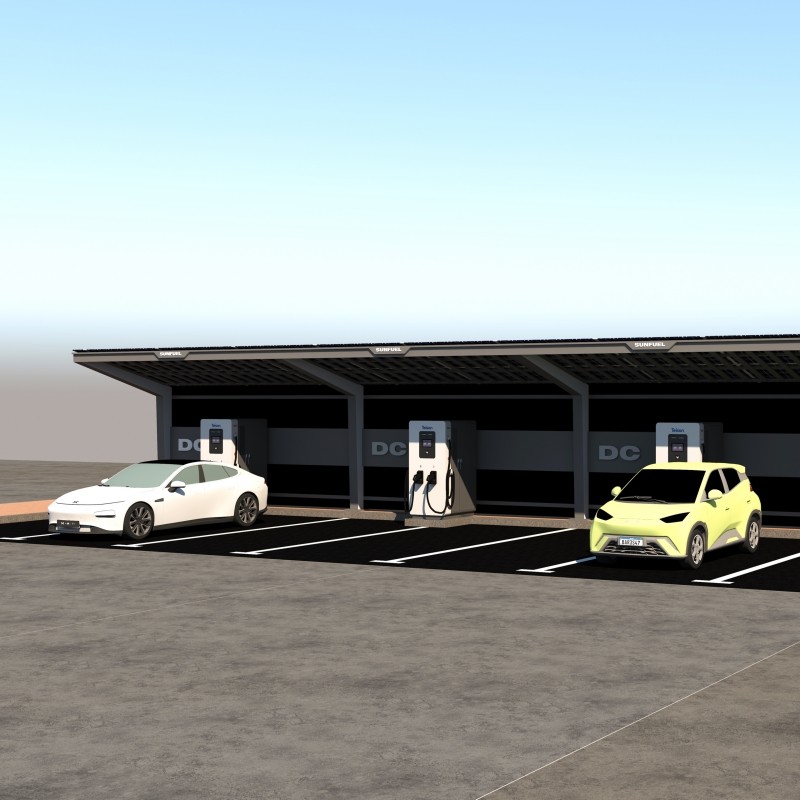
As electric vehicle sales soared, the Chinese government increased subsidies for companies to build public charging stations. The government also encourages new apartment buildings to provide infrastructure so that residents can easily install their own charging stations.
By May 2025, China will have more than 14 million charging stations, nine times as many as at the end of 2020. By comparison, the United States has about 230,000 public and private charging stations.
China is pushing cities to replace diesel buses with electric ones.
Chinese battery maker CATL has grown rapidly in the past few years and invested heavily in research and development. Now, CATL and BYD say they have each developed technology that can charge a vehicle almost to full in just 5 minutes, thanks to R&D spending.
The report pointed out that now, China's electric vehicle factories are a symbol of its manufacturing strength. Chinese automaker Zeekr has automated processes such as welding. In a Zeekr showroom, a salesperson activated the built-in massage function of the driver's seat by voice, while an app in the car played Chinese classics on the video screen.
In the United States, sales of electric and hybrid vehicles have grown slower than in China, accounting for 20% of light vehicle sales at the end of last year, compared with 12% at the beginning of 2022, according to research firm Omdia. But high inventory levels of electric vehicles at some dealerships suggest limited U.S. demand, which comes as Congress considers eliminating a tax credit of up to $7,500 for buying electric vehicles to free up funds for other priorities.
Related Posts
- ISO 15118 and OCPP for V2G: How EVs, Chargers and Charging Networks Communicate
- 8,833 Battery Electric Vehicles Registered in Malaysia in August 2026
- Why 1.2MW Charging Requires Smart Energy Management
- What Is the Megawatt Charging System (MCS) and How Does It Work?
- Teison Is Heading to IAA TRANSPORTATION 2026!